
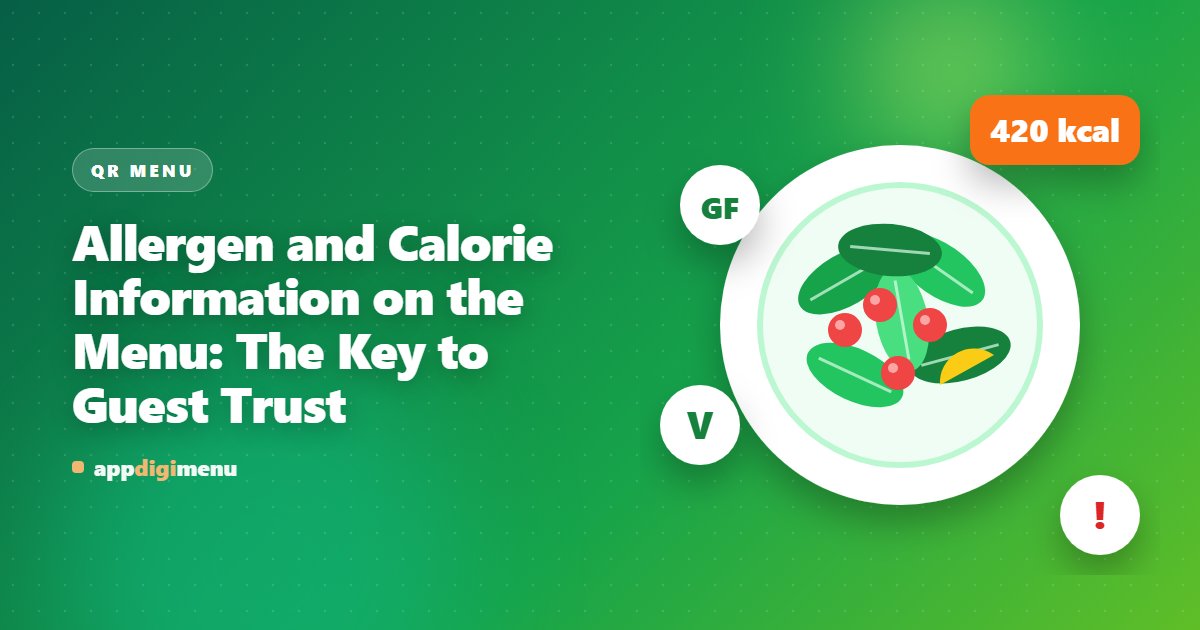
For guests with a food allergy or intolerance, eating out is always a risk. Questions like "Does this contain nuts?" or "Do you have a gluten-free option?" are answered in most restaurants by the waiter going back and forth to the kitchen. That takes time and increases the risk of mistakes.
Why does allergen information matter?
- Guest health: Incorrect information can cause serious health problems for some guests.
- Legislation: Food legislation requires consumers to be informed about allergens in food served without packaging too.
- Trust: A venue that clearly shows its allergens looks careful and trustworthy in the guest's eyes.
Calories and preparation time also make a difference
Guests who watch what they eat want to know the calories, and guests in a hurry want to know how many minutes a dish takes. Showing this information on the menu lets guests make the right choice themselves.
How does it work in MenuRobo?
You add allergen markers, calories and preparation time to each product. When guests open the menu they see this information on the product. And when they ask the menu assistant Digi "what is gluten-free?", the answer is based on the information you entered.
Three tips for accurate information
- Update allergen information when a recipe changes too; outdated information is more dangerous than none.
- Take easily overlooked ingredients such as sauces, garnishes and frying oil into account.
- Train your staff to always inform the kitchen when a guest mentions an allergy.