
Taking orders from the table with a QR menu significantly speeds up service. But operators have a legitimate concern: "Can someone who knows the menu link place an order without being in the restaurant?"
The problem: a publicly accessible menu link
In simple QR menu systems, the table code is just a number at the end of the link. Anyone who knows the link can change that number and order to another table, or even without ever coming to the restaurant. The result: orders prepared in the kitchen that belong to no one.
The solution: an encrypted QR for every table
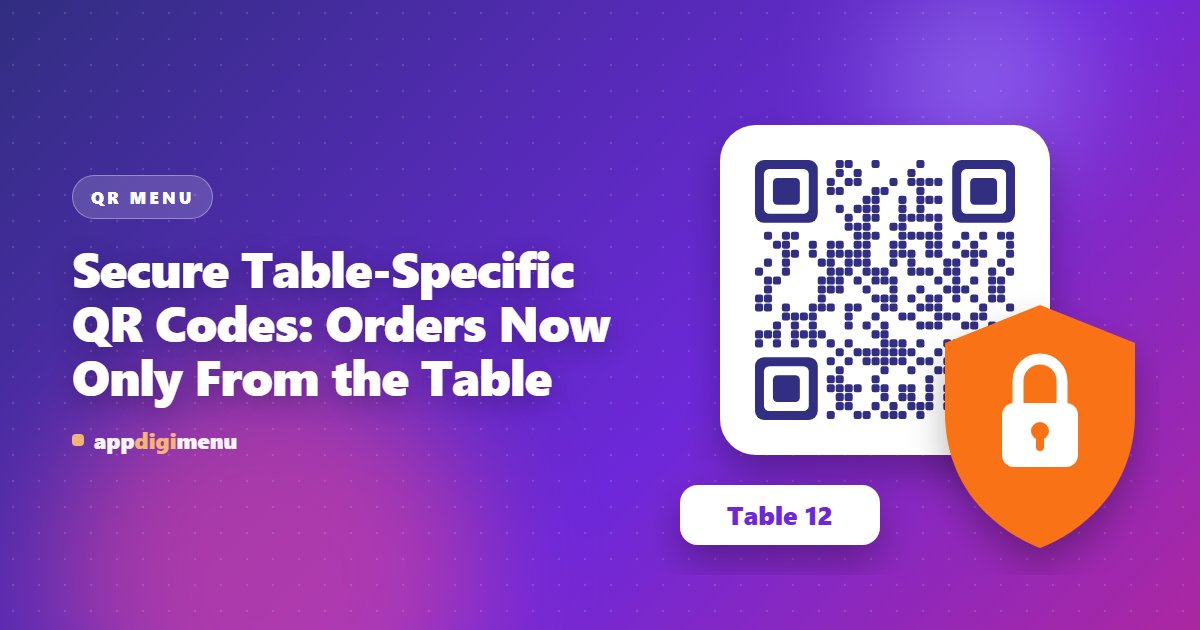
In MenuRobo, the QR code of every table and every hotel room contains an unguessable security key. Orders are only accepted with this key, meaning only from the guest who actually scanned the code on the table.
- The table number cannot be changed: Changing the number in the link does not place an order for another table.
- A shared link cannot place orders: After the guest scans the QR code, the link in the address bar no longer contains the key. Even if they send this link to a friend, the person opening it can view the menu but cannot order.
- Time-limited verification: The scanned table stays valid for a certain time; the guest cannot keep ordering from the same phone long after leaving the table.
Extra security: waiter approval
If you wish, you can also require orders to be approved by a waiter before they go to the kitchen. The guest chooses their waiter when ordering, and once the waiter approves, the order lands in the kitchen. In hotels, orders charged to the room are also posted to the room account only after reception approval.
Conclusion
With the right security measures, ordering from the table becomes easier for both guests and the business. You can be sure the order really comes from the guest at the table, and your kitchen only deals with genuine orders.